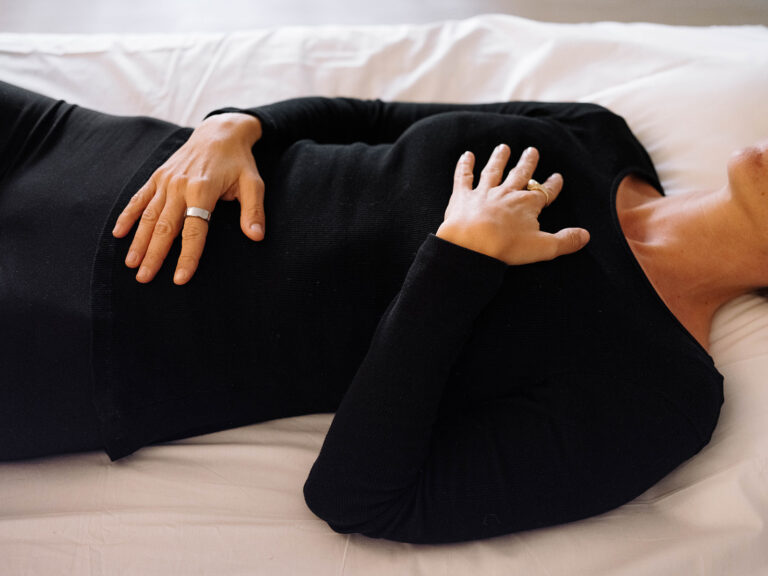

Altered States of Consciousness through Conscious-Connected Breathwork
What science reveals about breath, CO₂, and expanded awareness Altered states of consciousness are not new. Humans have accessed them for millennia through ritual, meditation, fasting, chanting, and breath. What is new is the growing body of scientific research explaining how these states arise in the body and brain.A recent peer-reviewed study published in Communications Psychology (Nature Portfolio) provides one of the clearest explanations to date of how Conscious-Connected Breathwork reliably induces altered states of consciousness — and why these states can feel so profound, meaningful, and sometimes life-changing. Conscious-Connected Breathwork: a physiological shift, not imagination Conscious-Connected Breathwork involves breathing in a continuous, uninterrupted rhythm, with no pauses between inhale and exhale. The breath is typically deeper and slightly faster than resting breathing and is sustained for an extended period.From a physiological perspective, this form of breathing leads to controlled hyperventilation. While the word “hyperventilation” often carries negative associations, in this context it is deliberate, contained, and purposeful.The key effect is a reduction in carbon dioxide (CO₂) levels in the blood. Why CO₂ matters more than oxygen Most people assume altered states come from “more oxygen.” In reality, oxygen levels remain relatively stable during breathwork. What changes dramatically is CO₂.The study measured end-tidal CO₂ (etCO₂) — the amount of carbon dioxide present at the end of an exhalation. This is a reliable indicator of CO₂ levels in the blood.Researchers found: This relationship was strong, consistent, and statistically significant. What happens in the brain when CO₂ drops? Lower CO₂ levels trigger several well-known physiological effects:1. Respiratory alkalosis 2. Cerebral vasoconstrictionBlood vessels in the brain constrict slightly, especially in higher-order cortical areas involved in: 3. Reduced top-down control When these cortical control systems quiet down, perception becomes less filtered and more fluid. This combination creates ideal conditions for altered states of consciousness, including: In simple terms:the brain shifts from controlling experience to allowing experience. Breathwork and psychedelic-like states: measured, not assumed To evaluate subjective experience, researchers used the same validated tools employed in psychedelic science: Results showed that Conscious-Connected Breathwork: Importantly, these effects were not dependent on belief — they correlated directly with measurable physiological changes. Why altered states can support mental well-being The study also assessed psychological outcomes one week after the breathwork session. Participants who actively practiced breathwork showed: These improvements were not random. They were predicted by: This aligns with broader neuroscience research suggesting that altered states temporarily loosen rigid mental patterns, allowing for new emotional and cognitive configurations. Context still matters: the role of set and setting Interestingly, participants who did not actively change their breathing — but were present in the same music-supported, facilitated environment — still reported mild altered states. This confirms a key principle also seen in psychedelic research: Physiology opens the door, but context shapes what walks through it. Breathwork works through both: Breath as a self-regulating pathway to altered consciousness What makes Conscious-Connected Breathwork unique is that it: Rather than forcing a state, breathwork creates the conditions in which altered consciousness can naturally arise — and resolve. A grounded conclusion This research confirms something both ancient and quietly radical: Altered states of…